A Homeowner’s Guide
Switching to renewable energy is one of the smartest financial decisions a homeowner can make. It lowers your utility bills and protects you from rising energy rates. However, before you can start saving, you need to size your system correctly. The most common question we hear from our clients in the Central Valley is: how many solar panels do I need to power my home efficiently?
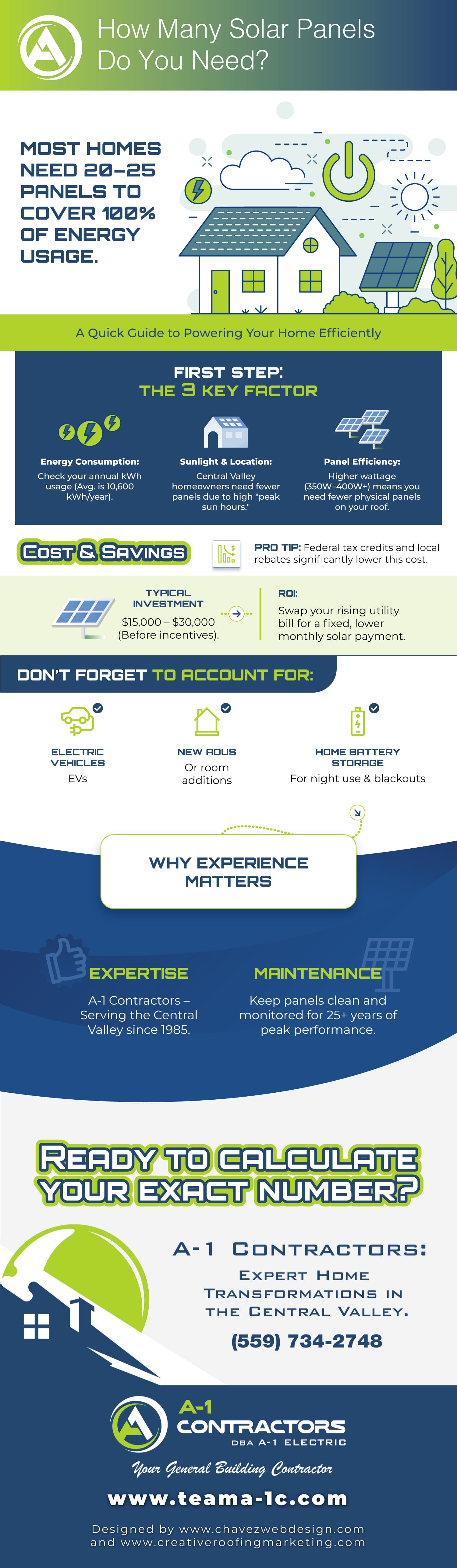
The answer isn’t a single number, but rather a calculation based on your unique lifestyle and property. On average, a typical American home requires between 20 and 25 panels to cover 100% of its electricity usage. To get a precise figure, you need to look at three main factors: your energy consumption, your location, and the wattage of the panels you choose.
1. Analyze Your Energy Usage
The first step is understanding how much electricity you actually use. Grab your electricity bill and look for your annual kilowatt-hour (kWh) usage. Most utility companies provide a 12-month summary at the bottom of the bill.
The average U.S. home uses about 10,600 kWh of electricity per year. If your home has a pool, an electric vehicle, or runs the AC heavily during Visalia summers, your needs will be higher. Our professional Solar Panel Installation team reviews this data to design a system that matches your specific consumption patterns.

2. Sunlight and Roof Orientation
Solar panels thrive on direct sunlight. Living in California’s Central Valley gives us a distinct advantage because we enjoy high “peak sun hours.” This means you might need fewer panels compared to someone living in a cloudy region like Seattle.
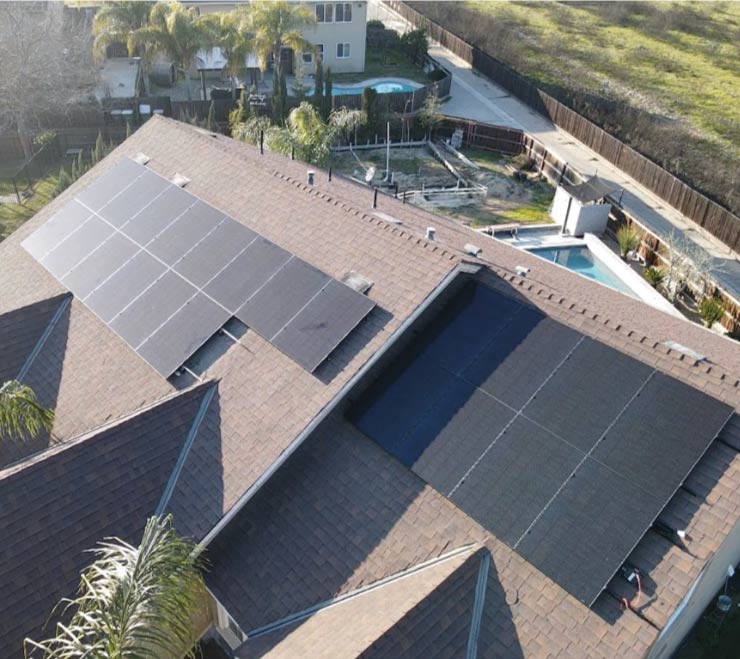
Your roof’s orientation also matters. South-facing roofs generally capture the most energy. If your roof has significant shading or faces north, you might need a larger system or higher-efficiency panels to compensate.
3. Panel Wattage and Efficiency
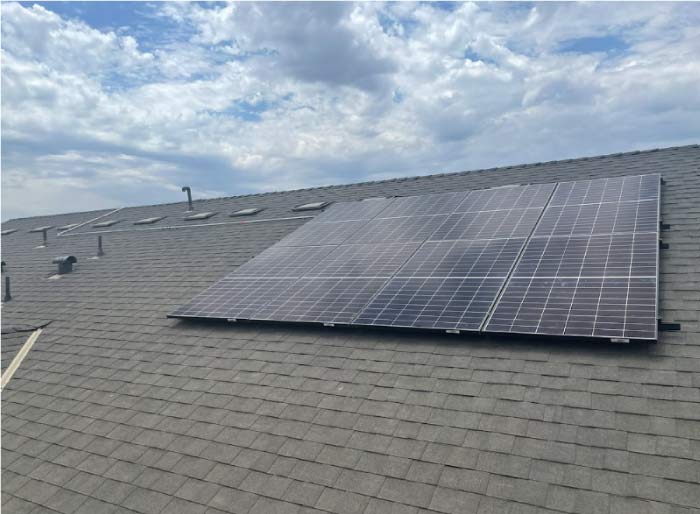
Not all solar panels are created equal. Panel wattage typically ranges from 250 to 400+ watts. High-efficiency panels produce more power in less space, which is ideal if you have a smaller roof.
If you choose premium panels with higher wattage, the total number of panels required decreases. During our consultation, we can walk you through the different Solar panels we offer to find the best balance of performance and budget for your home.

The Cost of Going Solar
Understanding the investment is just as important as knowing the panel count. The cost of a solar system typically ranges from $15,000 to $30,000 before incentives, depending on the system size (usually 6kW to 10kW).
While the upfront price might seem significant, federal tax credits and local rebates can substantially lower the net cost. If you are worried about the initial investment, explore our financing options. We offer solutions that can help you swap your current electric bill for a lower monthly solar payment.
Planning for the Future
When asking how many solar panels do I need, do not just think about today. Think about five years from now. Are you planning to buy an electric vehicle? Do you want to add a hot tub or build an ADU?
If your energy needs grow, your system needs to grow with them. We can design an Expansion System strategy so you can easily add more capacity later. Additionally, incorporating Battery Storage ensures you can store excess power for use at night or during power outages.
Keeping Your System Efficient
Once your system is installed, maintaining it ensures you get the maximum energy output for decades. Dust, pollen, and debris can slightly reduce efficiency over time.
Regular monitoring and occasional cleaning are key. Our Operation and Maintenance services ensure your panels continue to operate at peak performance year after year. For a deeper dive into how renewable energy potential is calculated based on location, you can check the National Renewable Energy Laboratory’s PVWatts Calculator, which provides location-specific data.

Why Choose A-1 Contractors?
At A-1 Contractors, we believe in honesty and precision. We don’t just sell panels; we are licensed electrical contractors who have been serving the Central Valley since 1985. While many companies have come and gone, our family-owned business has remained a staple in Visalia, Tulare, and Fresno.
We treat every home like our own, ensuring your electrical system is safe and your solar design is optimized for your needs. With nearly 40 years of experience, we provide the peace of mind that comes from working with true local experts.
Frequently Asked Questions
Does the size of my house determine how many panels I need?
Not necessarily. While larger homes often use more energy, the determining factor is your electricity consumption (kWh), not square footage. A small home with poor insulation and old appliances might use more power than a large, energy-efficient home.
Will my solar panels work on cloudy days?
Yes, solar panels still generate electricity on cloudy days, though their output is reduced. They rely on daylight, not just direct heat. However, living in a sunny area maximizes your return on investment.
How long do solar panels last?
Most modern solar panels are designed to last 25 to 30 years or more. They are built to withstand harsh weather conditions, including hail and high winds, making them a durable long-term investment.
Do I need a battery with my solar panels?
It is not required, but it is highly recommended. A battery allows you to store excess energy generated during the day to use at night or during blackouts, giving you true energy independence.
What is a "good" solar offset?
Solar offset is the percentage of your electricity usage that your system produces. Most homeowners aim for 100% offset to eliminate their electricity bill entirely. Some choose to go up to 110% to account for future energy needs.